
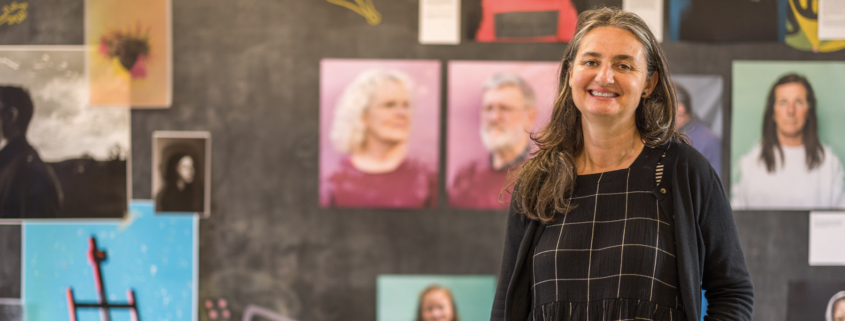
The COVID-19 pandemic had an enormous impact on all of us, transforming the way we live, work and socialise. In March 2022 I began work with Cheshire West and Chester Council, which wanted to find a creative way for residents to join together and reflect on their collective and shared experiences of that difficult time.
The council had discussed the idea of a memorial to mark the pandemic and decided that a socially-engaged project would be more beneficial to communities. During early discussions with them we decided the project – that would become known as Covid-19 Reflections – should engage residents creatively, allow space and time to process and reflect, and preserve their thoughts for future generations.
The result is a body of work that encompasses everything from tree planting to photography, knot tying to podcasting, and acting to book publishing. It can be explored in detail on a dedicated Covid-19 Reflections website, which itself became an important part of the legacy of this project.
The council’s progressive approach and a good working relationship with arts officer Carmel Clapson gave me, as project manager, creative and logistical freedom which I am incredibly grateful for. The project was entirely funded by Cheshire West and Chester Council which allowed the project to adapt to community needs. It was a liberating way of working which allowed the project to grow organically and be led by the artists and participants who engaged with it.
Being able to move slowly and at the pace of the communities involved over a two-year period was also a welcome contrast to the pandemic itself, which developed so quickly and was constantly changing. The project allowed for genuine and meaningful reflection for everyone who participated and worked on it.
Lost Voices, Experiences, How Society Has Changed, and Space To Reflect would become the main branches of Reflections from which individual projects would sprout, grow and blossom.
The first step of Covid-19 Reflections was to identify the major themes it would need to encompass. This entailed extensive research and many conversations before settling on four. Lost Voices, Experiences, How Society Has Changed, and Space To Reflect would become the main branches of Reflections from which individual projects would sprout, grow and blossom.
The next stage was the recruitment of artists and practitioners who would take the various strands forward. This involved a mix of open calls and identifying and approaching local and regional artists. I then worked with each of them to develop their ideas and support them to realise their projects.
Finally, after a huge amount of work on laying these foundations for Reflections, the projects were taken out into the communities.
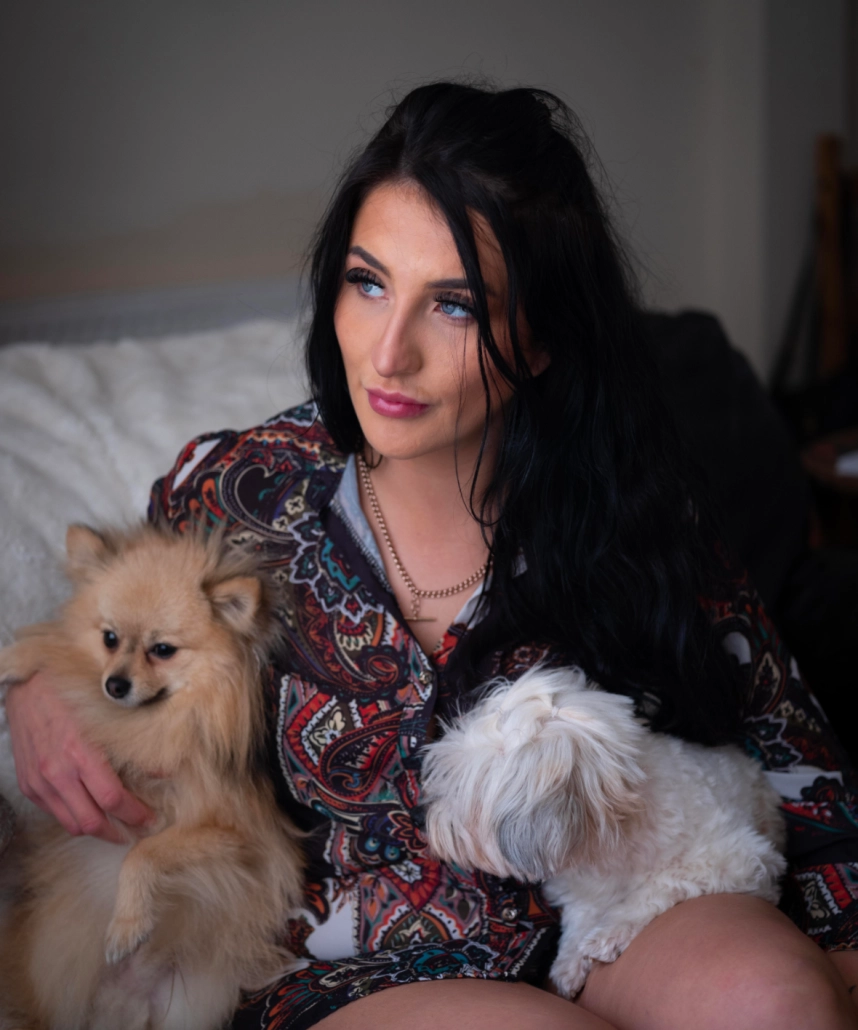
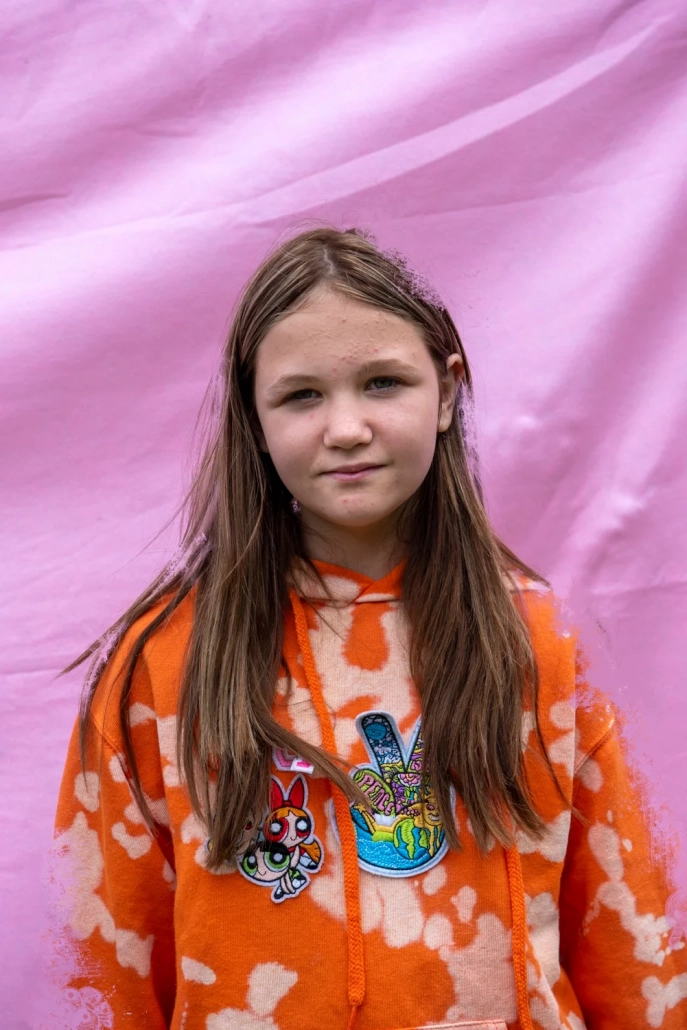
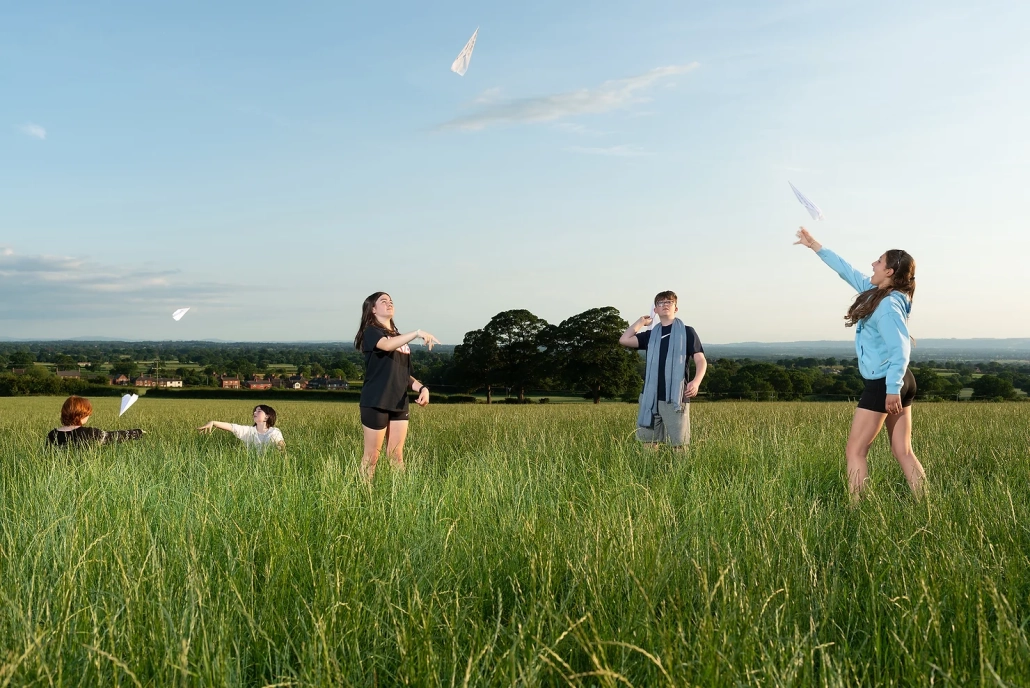
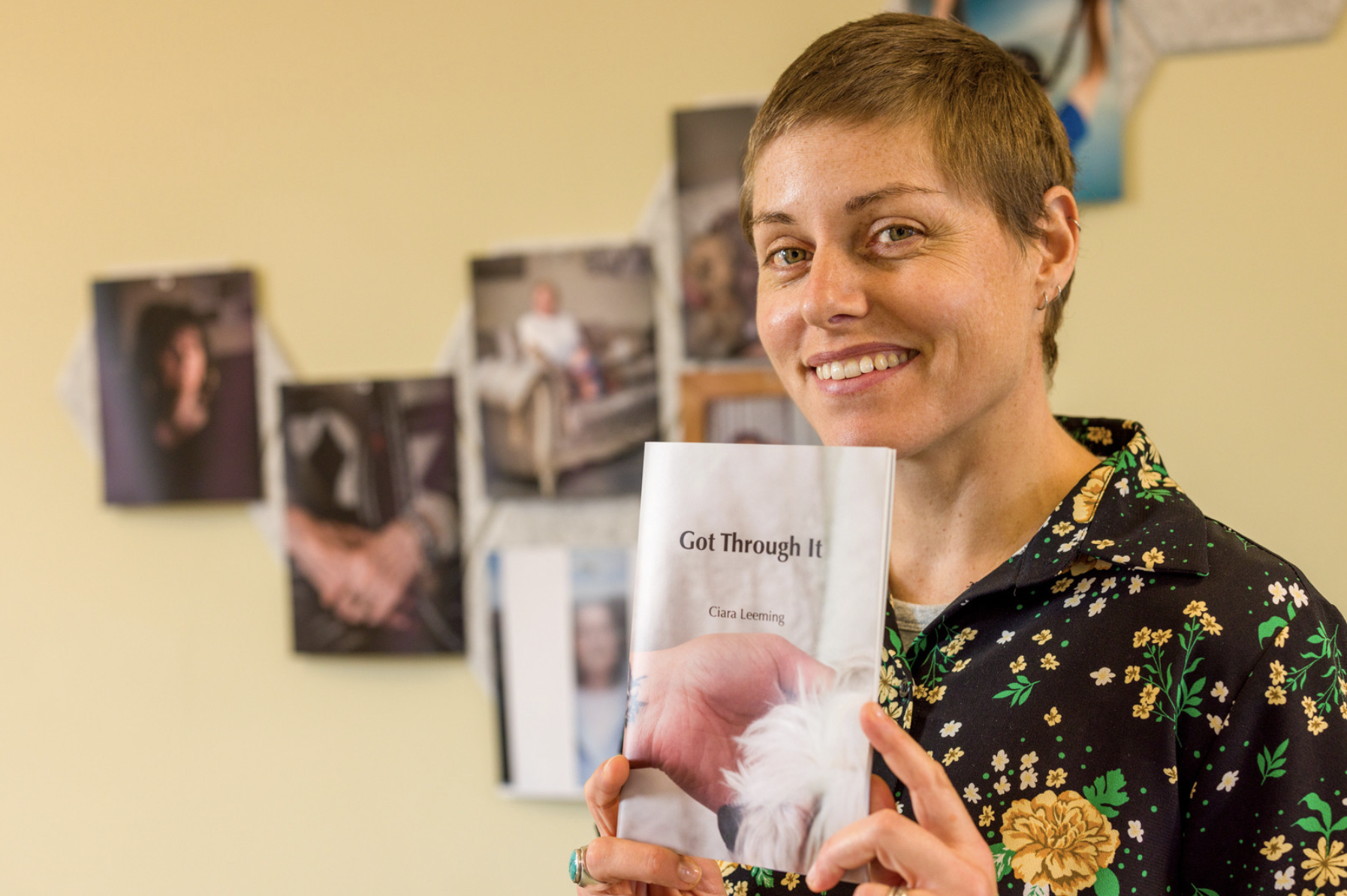
Lost Voices was led by three photographers – Ciara Leeming, Sam Ivin and Tadhg Devlin who engaged with underrepresented communities to visually tell the stories that went untold during the pandemic. Over multiple visits and copious cups of tea Ciara documented the lives and recent experiences of seven different Gypsy and Traveller women and girls and created a zine. Sam worked with carers, whose often unpaid work was intensified during the pandemic, and created a series of portraits. And through portraiture, staged imagery, video and audio recordings, Tadhg captured the diversity of experiences and views on life for those living rurally during the pandemic – from young people to farmers. The resulting images were displayed in spaces including Grosvenor Shopping Centre in Chester and on the external walls of Liverpool’s Open Eye Gallery, ensuring as many members of the public as possible were exposed to these hidden stories.
Filament Projects, a female-led theatre company producing wondrous and thoughtful projects, led the Experiences strand of Covid-19 reflections. They worked in partnership with Vivo Care Choices, which provides a range of flexible and responsive support for people with learning disabilities and autism as well as older people. Resulting conversations were recorded and gathered together in an innovative audio installation based on an old telephone exchange. The Exchange then toured libraries around the borough, allowing the general public to hear the stories of Vivo’s service users first hand.
How Society Changed was led by Jayne Lawless, a socially-engaged artist from Liverpool and founder of Dead Pigeon Gallery. Jayne worked with the community at Ellesmere Port in the Westminster Community Centre (affectionately known as the Wezzie) and Theatre Porto. The projects that emerged grew organically, were community-led and surprising.
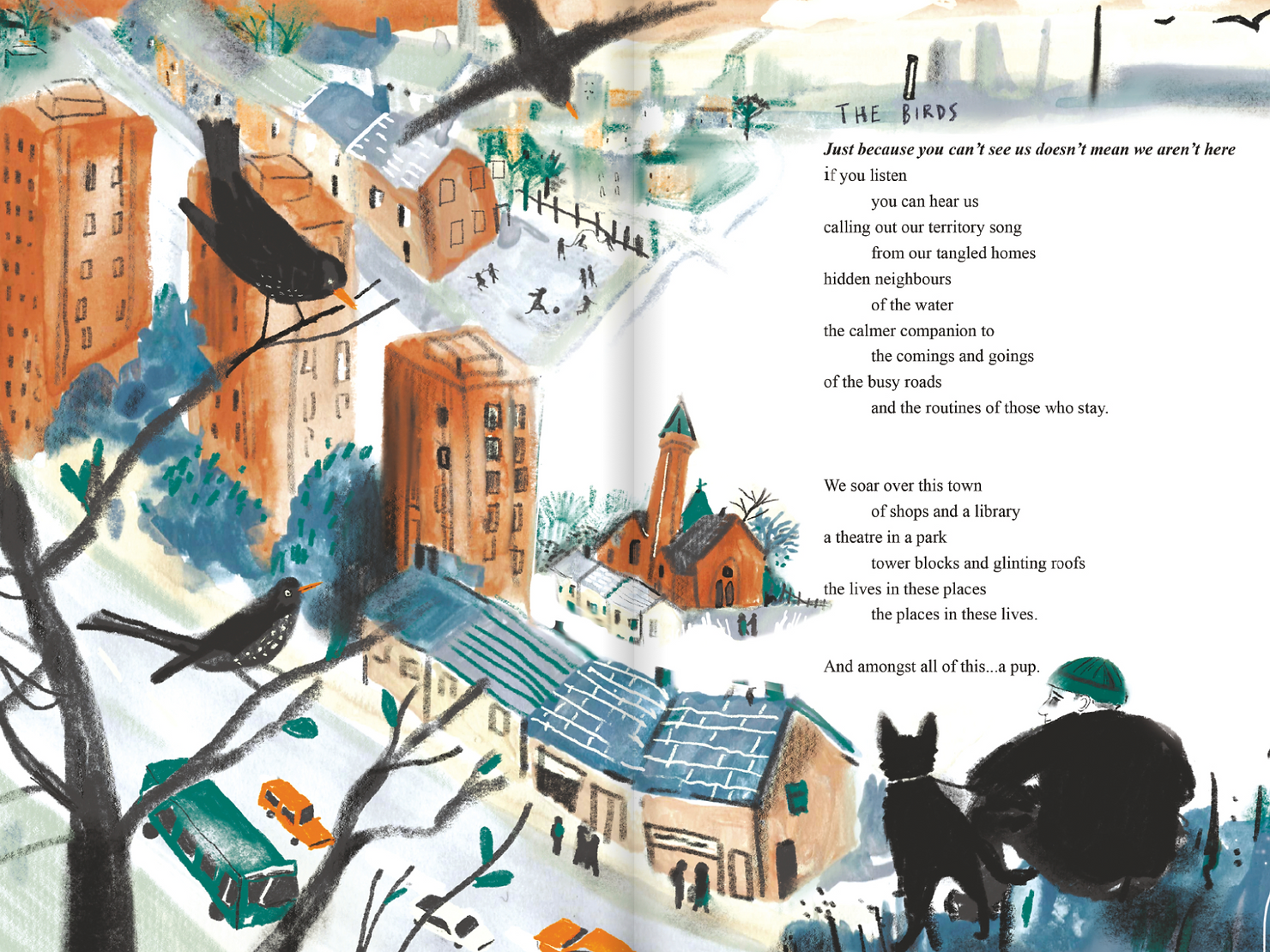
At the Wezzie, conversations were had about a neighbourhood dog who had become anti-social due to his owner isolating during Covid when he was just a puppy. When his owner died during the period of Jayne’s residency, news reached the community that the dog had been sadly put to sleep. The Wezzie group responded by sharing the story of the pandemic through his eyes. The resulting picture book, A Dog Called Bear, is now available in the community and to buy. At Theatre Porto Jayne also began a sketch club. After taking part in it, resident Deb Jones became a shining example of the legacy of Covid-19 Reflections when she set up her own.
Space to Reflect was the strand of Covid-19 Reflections that perhaps left the most visible legacy of the project. Reflecting the connection to nature that the pandemic inspired in so many of us, it involved tree planting in green spaces and parks across the borough.
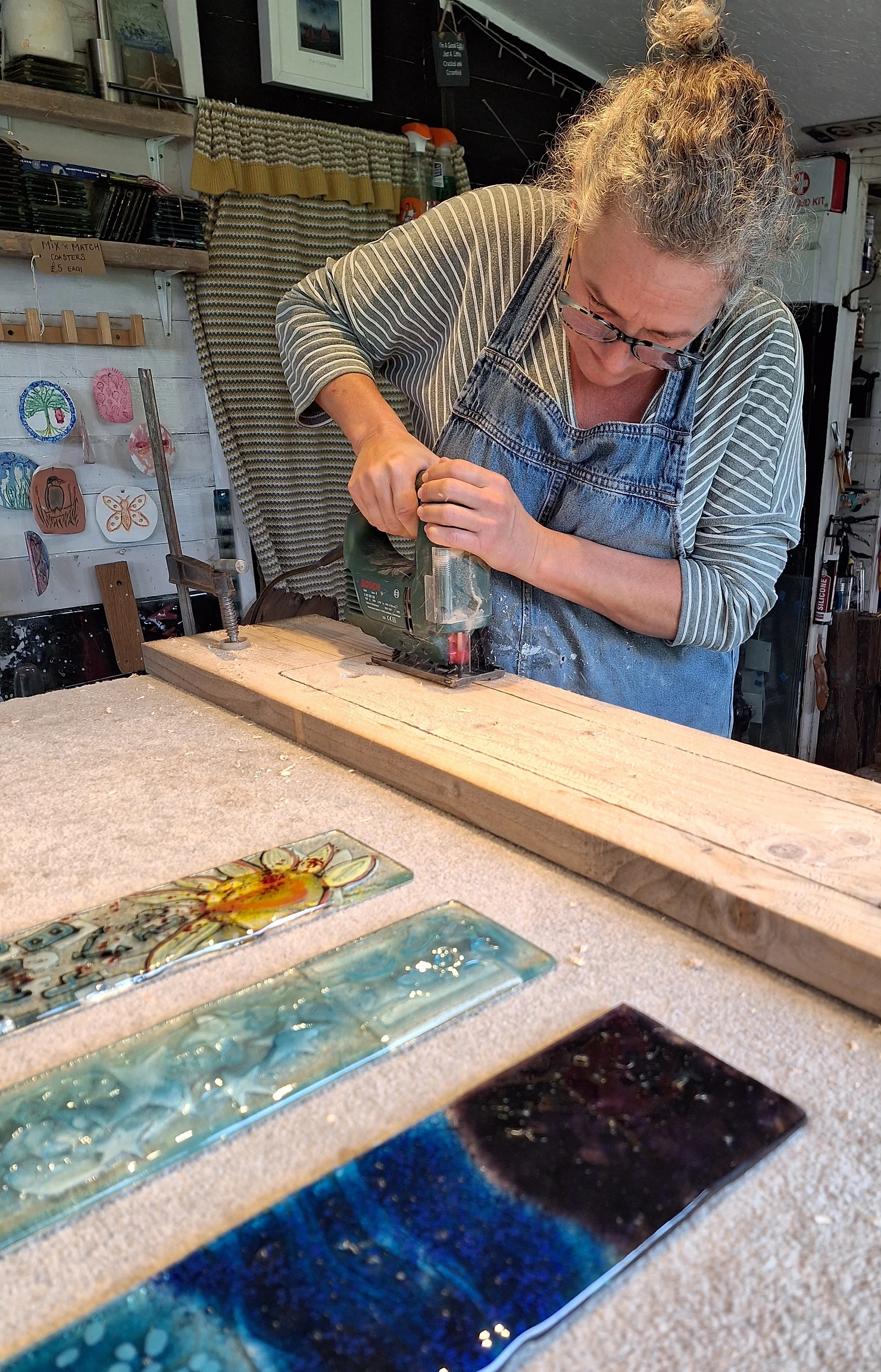
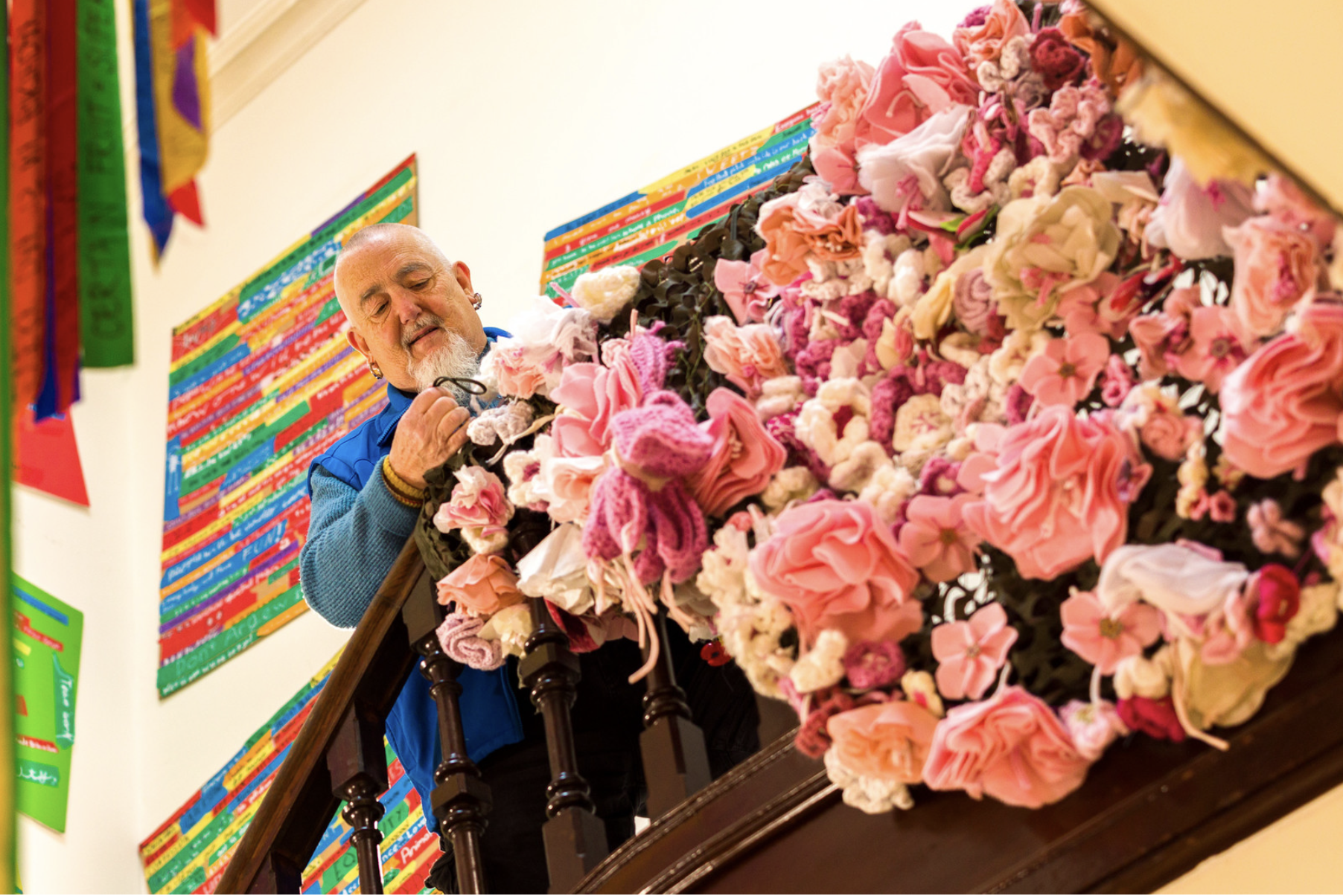
It also encompassed a series of micro-commissions. In Frodsham fused glass artist Helen Davies worked with the community to create a permanent installation in Castle Park Arts Centre garden. The Crosshatch Gallery in Winsford invited the community to reflect on their personal creativity during the pandemic. People submitted their work for display in their shop window, while local groups who already met at Crosshatch made brand new work. The work included everything from knot tying, yarn bombing and scrapbooking.
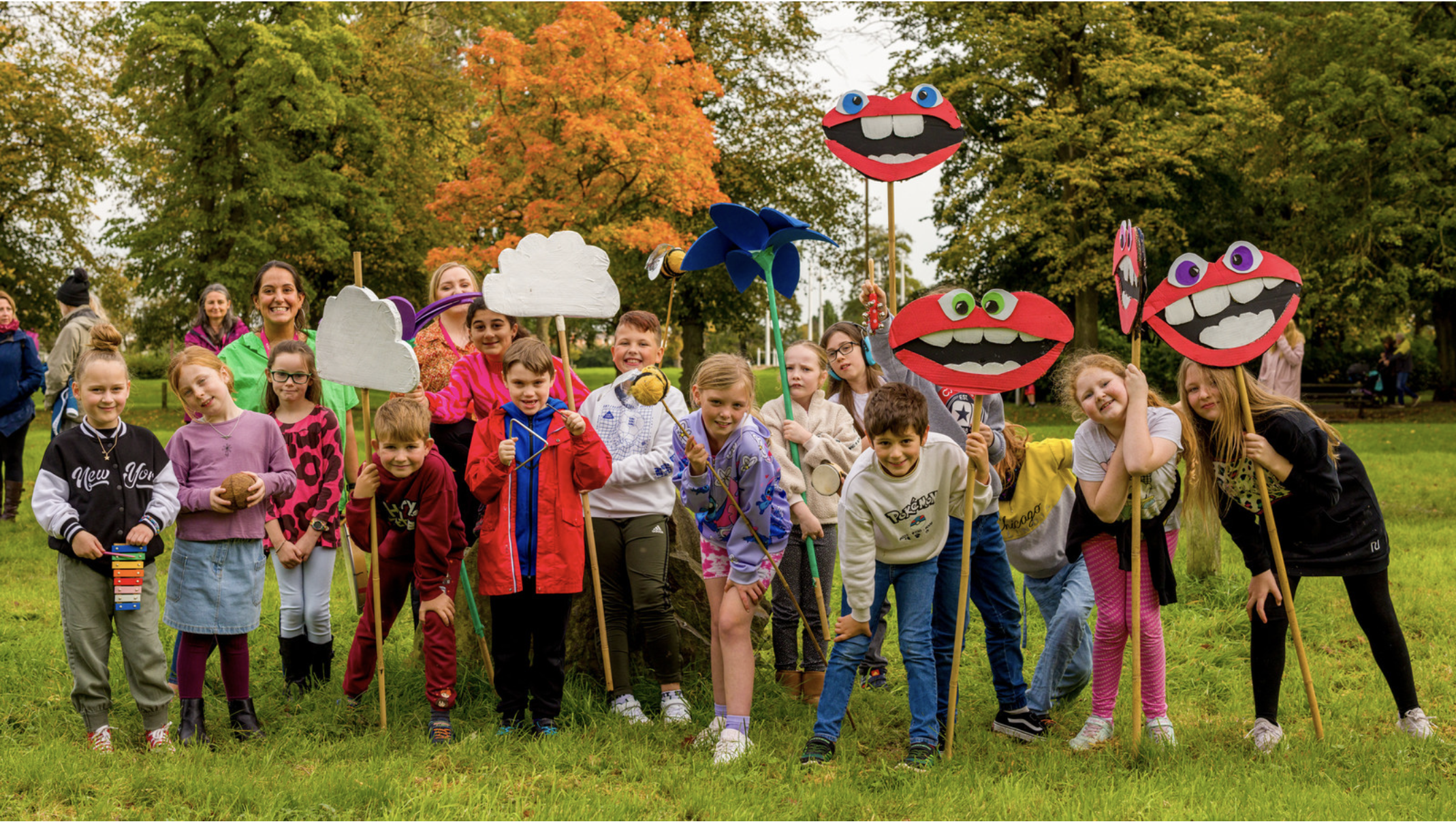
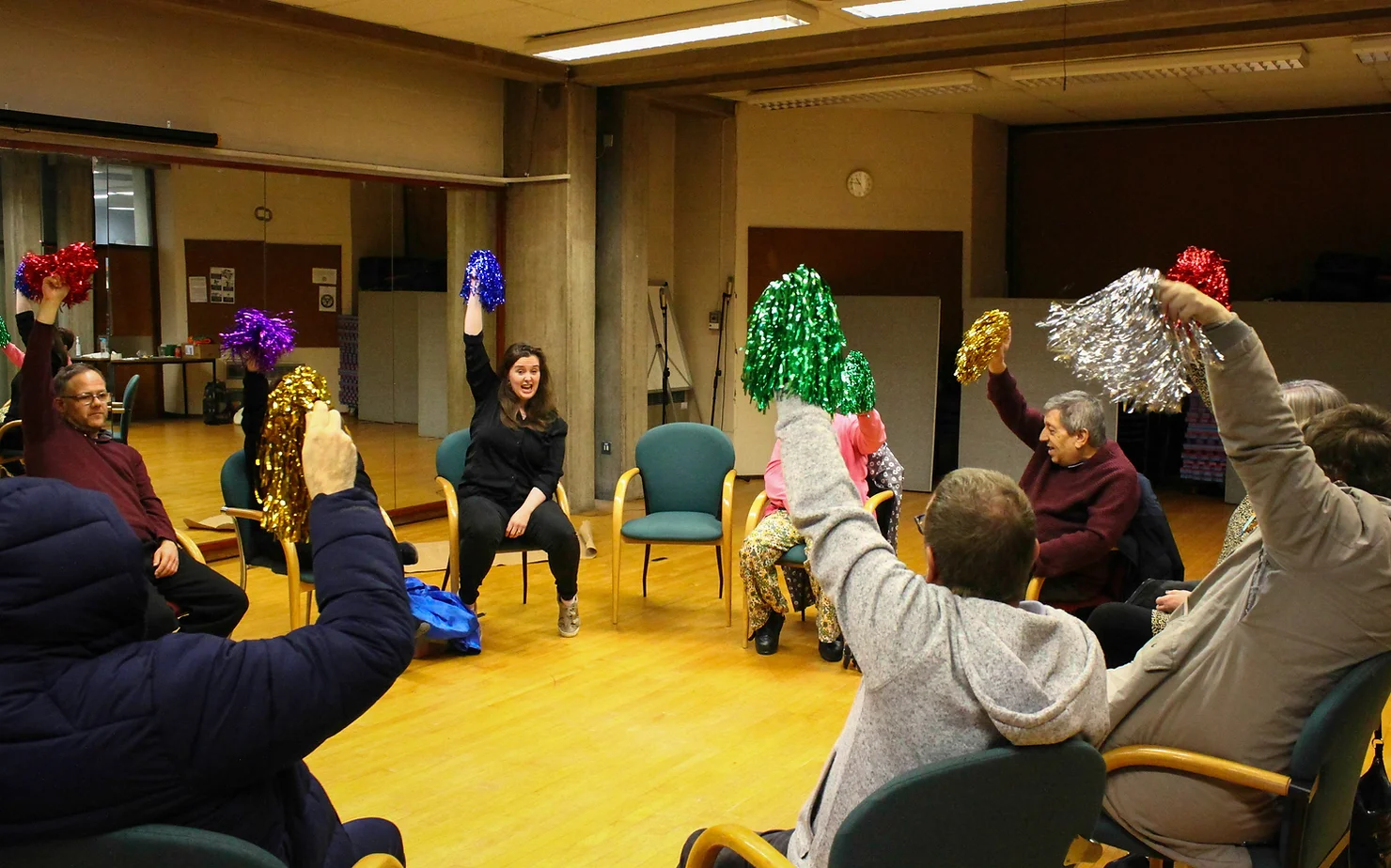
After reflecting on their own lockdown experiences, the Drama Droplets, a group of 7-11 year olds in Ellesmere Port, performed their Great Big Little Parade to over 100 audience members while InterACT Youth Theatre created a verbatim performance based on people’s experiences of the pandemic which they performed in Stanney Fields Park.
And Grosvenor Museum’s Meet and Make group, for people living with dementia and their loved ones, reconnected with Grosvenor Park through the creation of an accessible guide which allowed them to access old memories and make new ones.
While past projects I have worked on have involved some aspects of social engagement, working so closely and carefully with communities, and allowing them to lead the direction of the work produced in Covid-19 Reflections, presented a new way of working for me and was a really special experience. It became clear that this project had the power to be more than a memorial, or a sticking plaster on the sometimes traumatic experiences of the pandemic. It was a way for individuals and communities to take a moment to reflect on what they had been through.
This nature of the project meant there was an element of care that had to exist within it. I needed to ensure that artists – who were often outsiders to these communities – weren’t parachuted in to do something for or to participants, but instead that the work was led by the individuals and groups and that it was a cathartic and useful exercise for them. A huge number of internal conversations were had to ensure that this was navigated properly and carefully and to make sure that people – from community groups to council bosses – were comfortable and happy with the content.
We relied on contacts within communities to introduce the topic in a safe space and conversations began by focussing on the period of time rather than the virus itself. We became experienced in talking about it and quickly learnt what people wanted to share and what they didn’t. People on the whole were open and welcomed having a chance to talk about what they had been through. The pace of life and bouncing directly into a cost of living crisis has meant most of us haven’t had that opportunity. The carers groups in particular, who have so much to deal with on a daily basis, were amazed that someone had actually bothered to ask them how they felt about it.
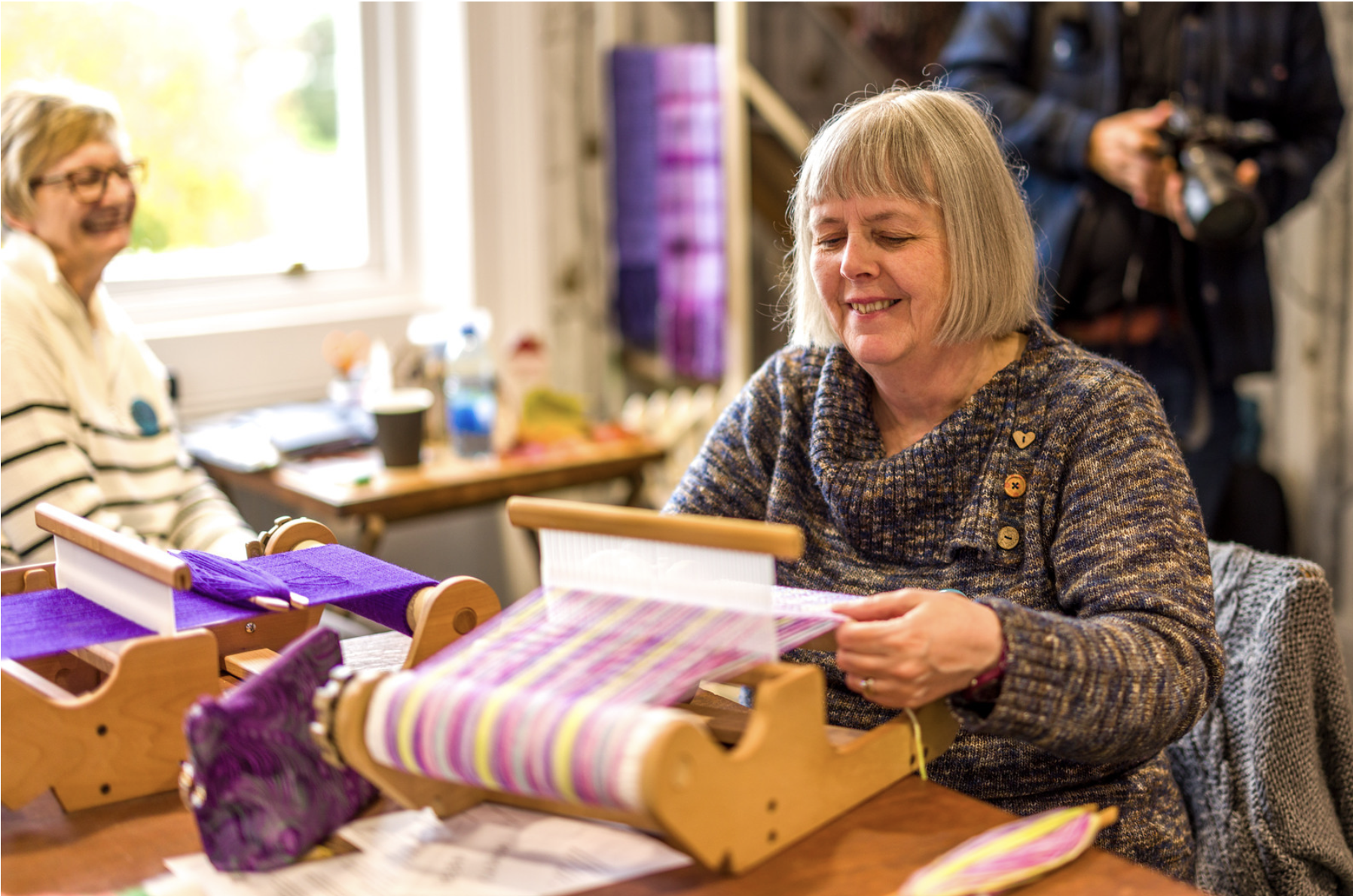
Communities were empowered by Reflections. Crafters in Winsford realised that their work was not just a domestic hobby, but worthy of inclusion in a borough-wide arts project. Others who had never considered themselves creative were suddenly making art. And underrepresented communities who may have felt society deemed their stories unworthy of note had them displayed for the world to see.
Covid-19 Reflections culminated in October with a sharing event and, if I had to choose, this would be the aspect of the project I am most proud of.
These are the legacies of Covid-19 Reflections, but it was also important to create a tangible archive. Alongside the four core strands and the main and micro commissions, we commissioned three more aspects to the project that would document it. As part of Jayne’s work on How Society Changed, she commissioned podcaster Mick Ord to capture audio conversations while filmmaker Jason Lock captured much of the project on film. Both these documentations are captured, alongside blogs and images on a dedicated Covid-19 Reflections website and were shared throughout the project on social media which I commissioned journalist Antonia Charlesworth Stack to take on as a project in its own right. Identifying that this kind of communications support would be necessary for Reflections and its legacy meant another new way of working for me and a wealth of experience gained.
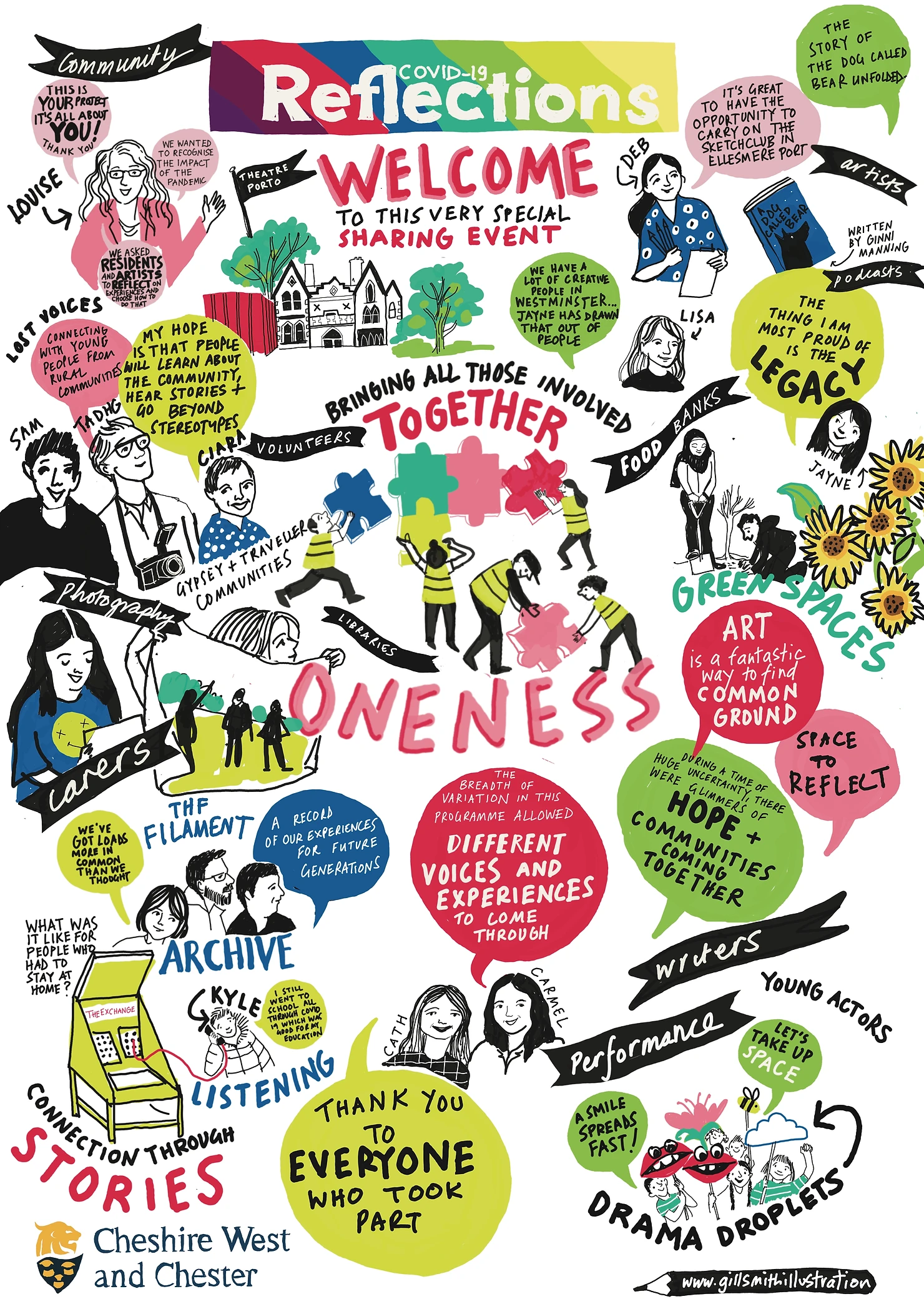
Covid-19 Reflections culminated in October with a sharing event and, if I had to choose, this would be the aspect of the project I am most proud of. Participants, artists, practitioners and council staff all came together at Theatre Porto to share the work created, discuss the process of creating it, strengthen and forge connections. Everybody really embraced it and all the work looked fabulous in Theatre Porto.
It had been important to me to create a peer support network between artists and practitioners throughout the project, so we had several smaller sharing sessions both in person and online throughout the project but October was the big one. I was really proud that we could bring everyone together and actually physically meet participants, artists and organisations. In some cases, I hadn’t met them before, and that in itself was a reflection of what we went through in Covid – how much of our work has become remote as a result. It felt lovely – an event worthy of all the effort that had been put in over the months, even years prior. We had been careful not to call it a celebration but, on the day, that’s exactly how it felt.
Photos: © Simon Hyde / simonhyde.co.uk


